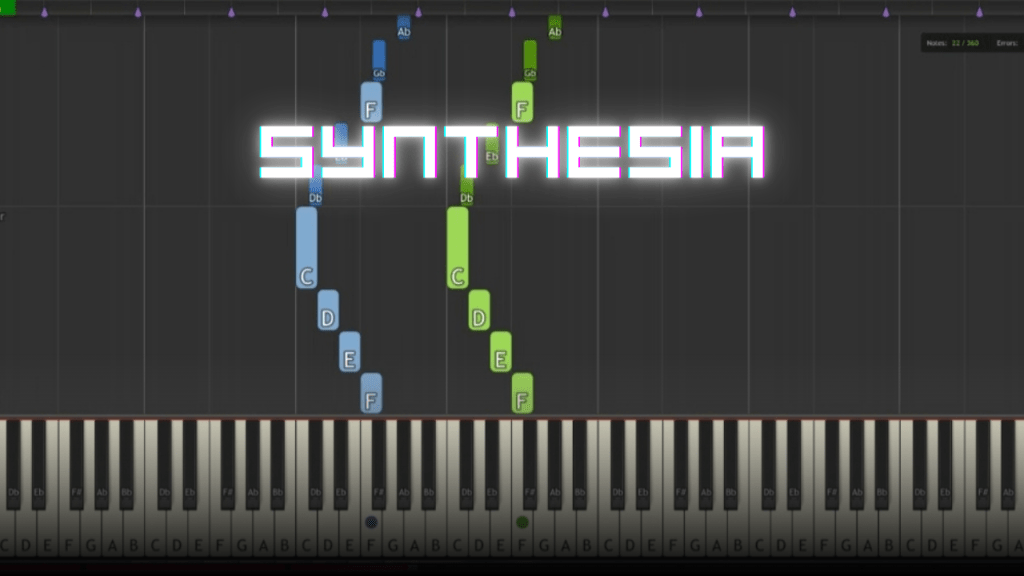
Synthesia is a fun and accessible way to learn to play piano, but is it ideal? Let’s explore the pros and the cons of learning using Synthesia.
PROS: There are some advantages of learning to play piano using Synthesia. It is beginner friendly as it makes learning engaging without the need of reading music. That way, it provides instant gratification. The app has many cool features such as slowing down the tempo, looping sections and practicing hands separately.
CONS: This method solely relies on playing through rote. You use your muscle memory to learn a particular piece without understanding other important aspects of it. It trains your eyes to follow falling blocks instead of reading the staff. It doesn’t teach a student proper techniques, such as good hand shape, fingerings, or body movements. This can develop bad technique habits or even piano related injuries. Furthermore, musicality is completely ignored. The app doesn’t provide any information on expression, dynamics, or phrasing which typically leads to a dry, robotic sound. Synthesia is inefficient for learning harder pieces. You may be able to learn simpler pieces quickly, but learning subsequent, more challenging pieces will be significantly slower.
In conclusion, a holistic approach is essential for effective piano learning. Key elements such as technique, repertoire, music theory, sight reading, and ear training are fundamental aspects of music education and should be integrated into every piano lesson. Additionally, if you want to develop into a well-rounded pianist, it is best used as a supplement alongside learning to read music and potentially taking lessons. If your goal is only to play a few specific songs for fun, it may work.
 Disha's Piano Studio 🎹